It started without a name.
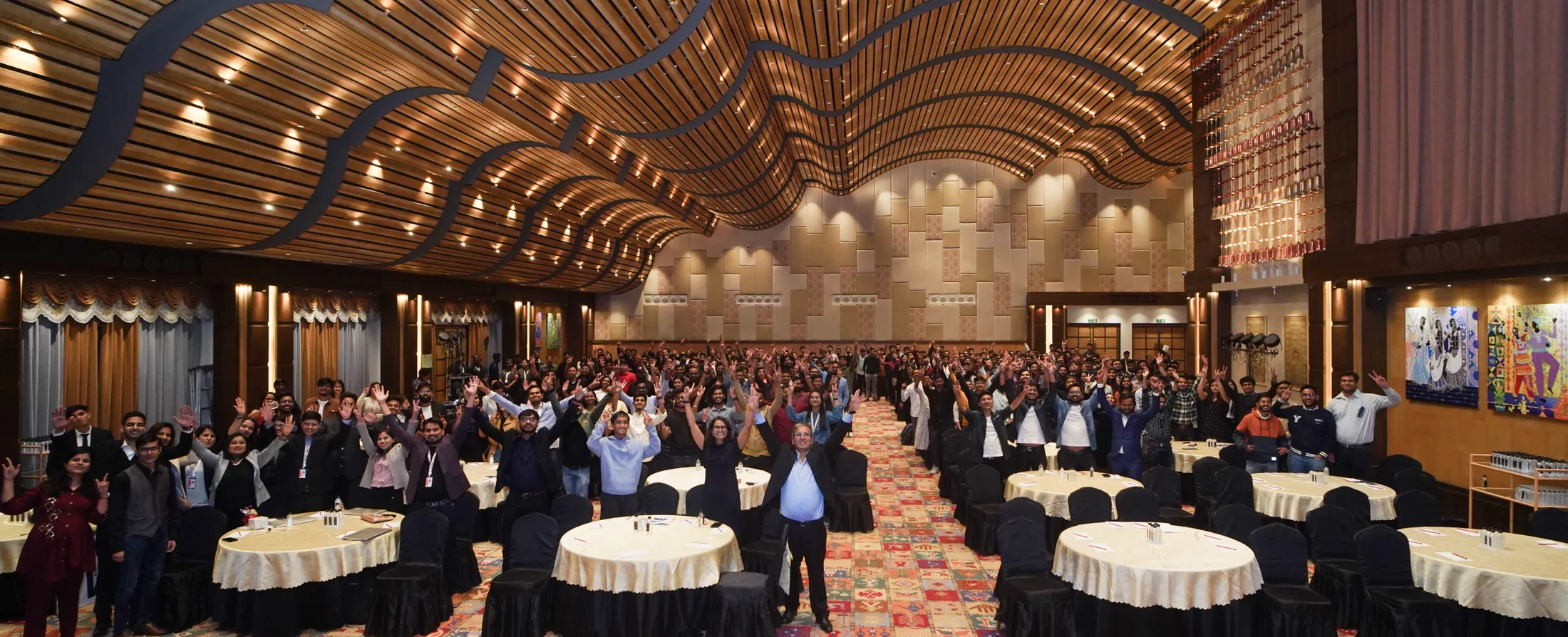
The first edition, in 2023, was a gathering in a hotel ballroom. It didn’t have a name, and none of us knew it would come back every year.
My main piece that year was our presentation. It held the room: people stayed in their seats until the last slide. I also helped other departments with their presentations, and we ran a small booth of our own. The budget was tight, so a lot of it was made by hand.
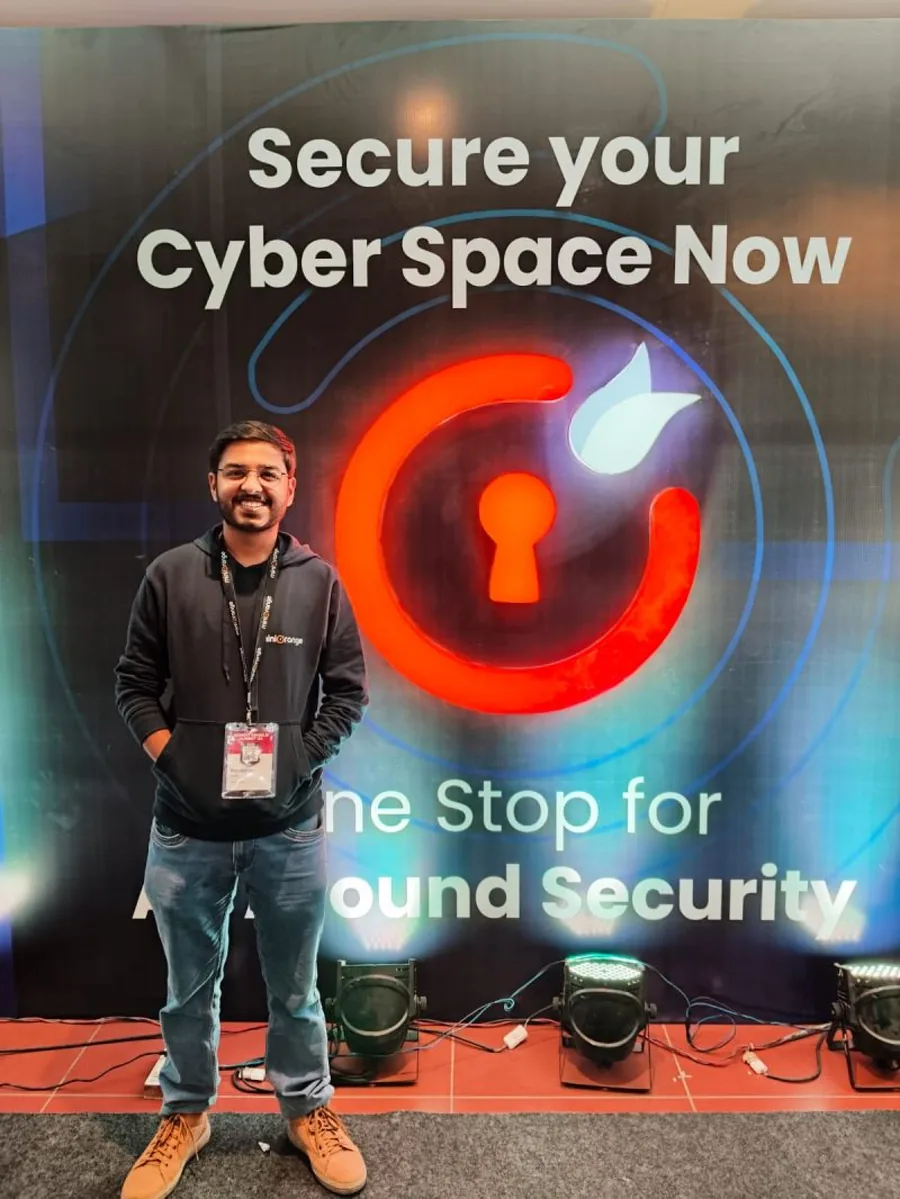
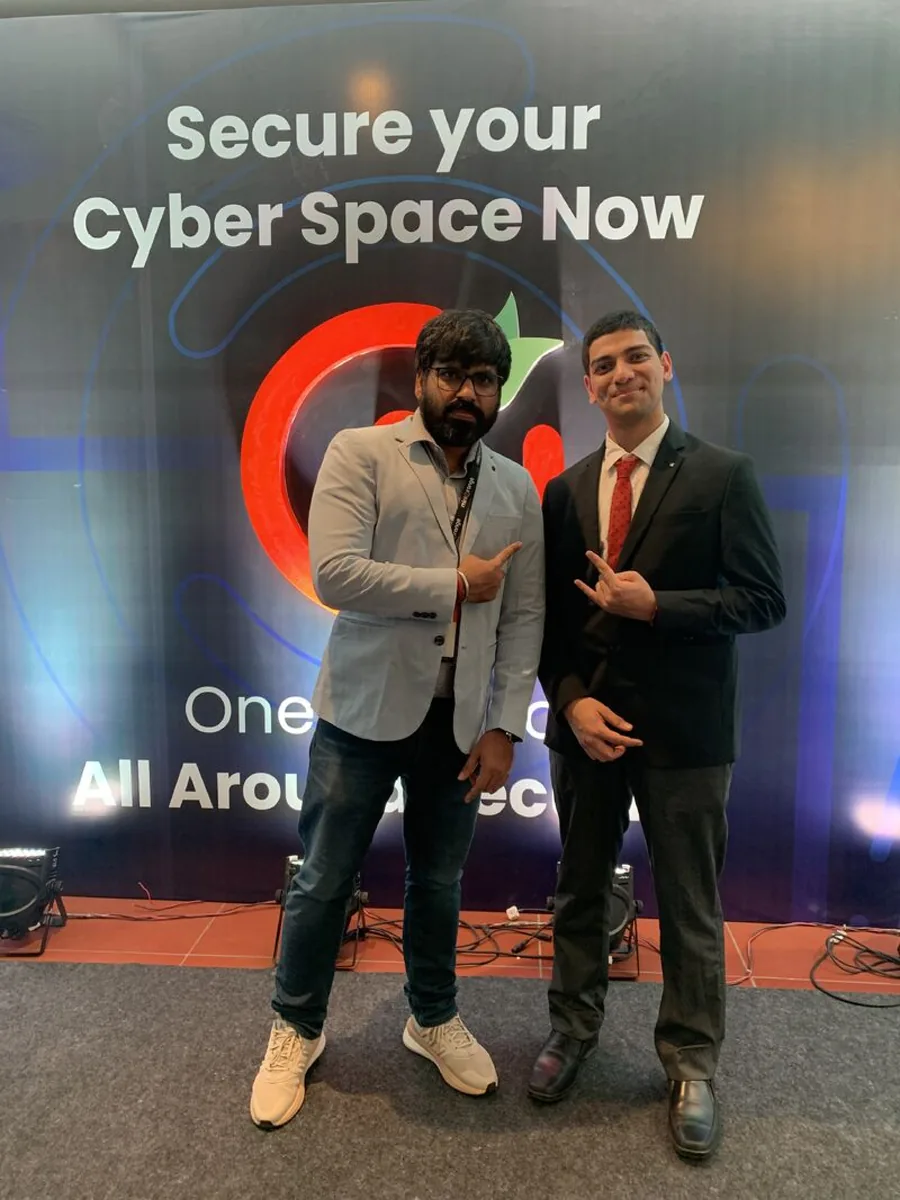
None of those files survived. This photo is the only one I still have from the day.
A name, then a mark.
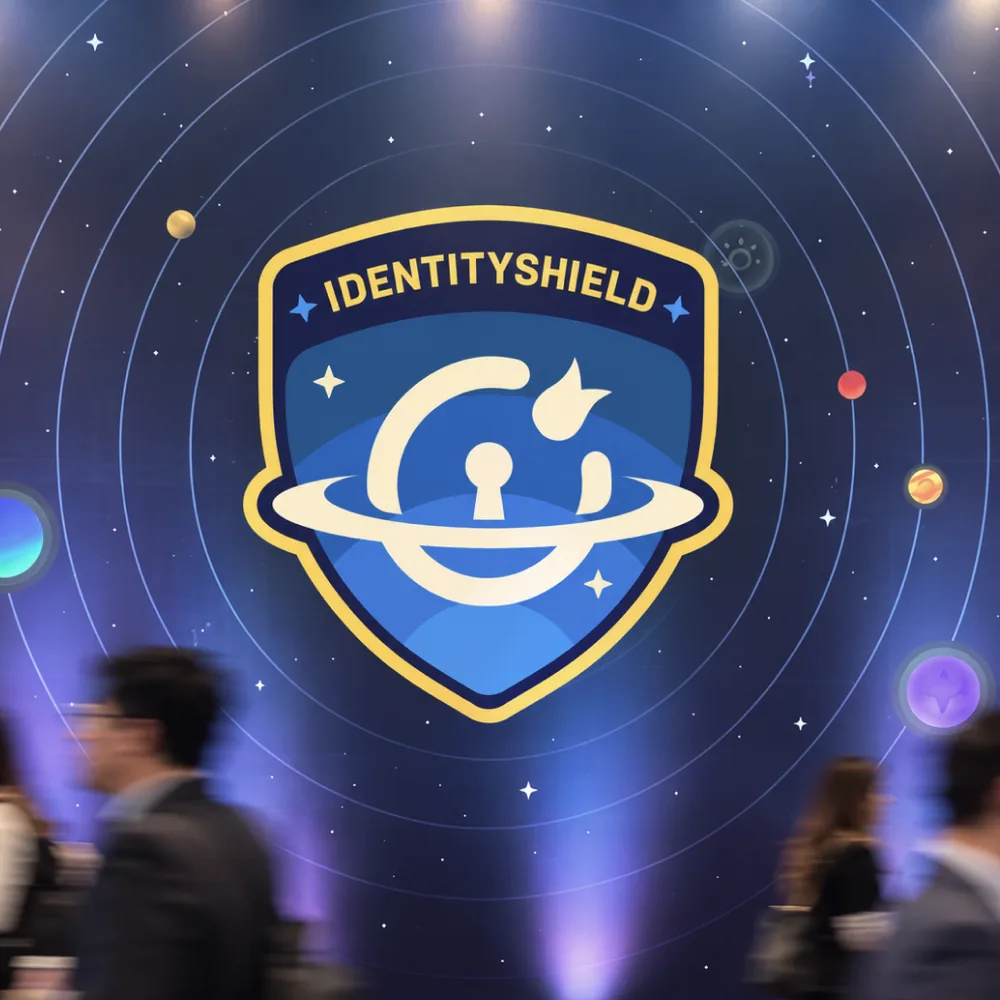
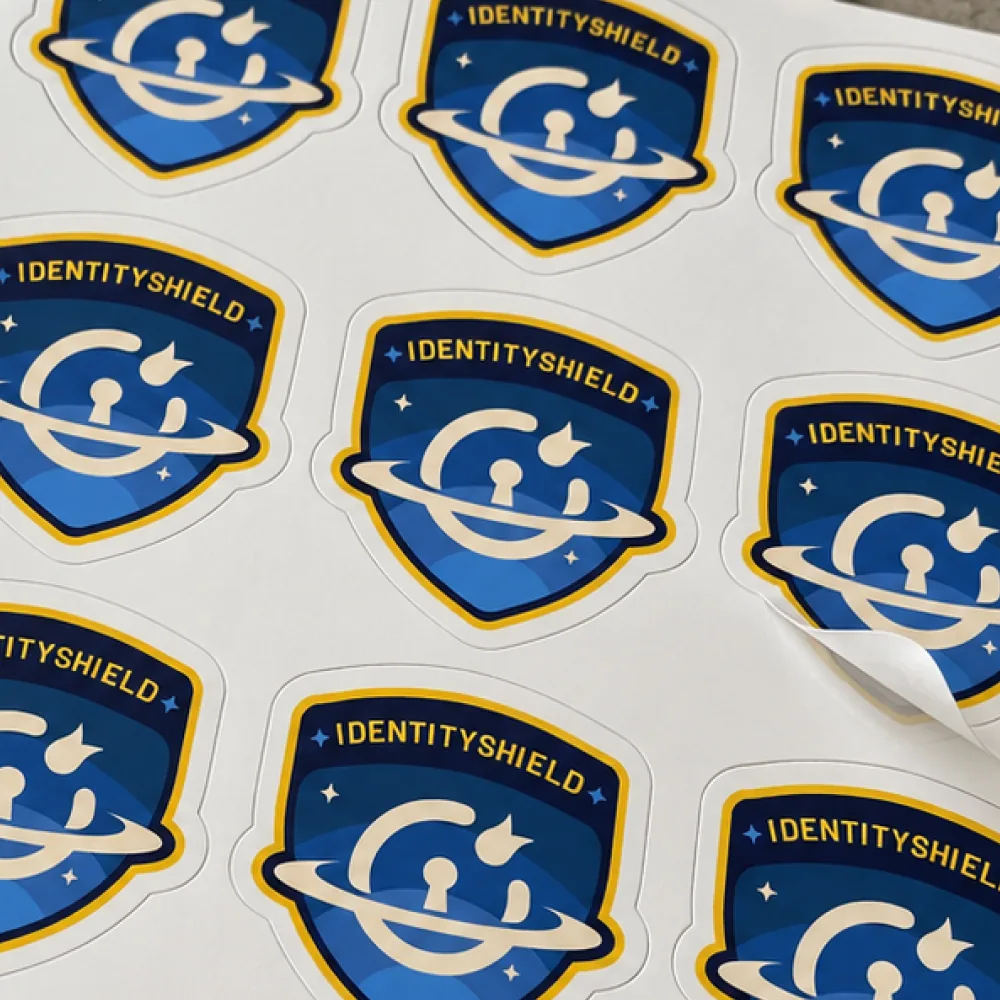
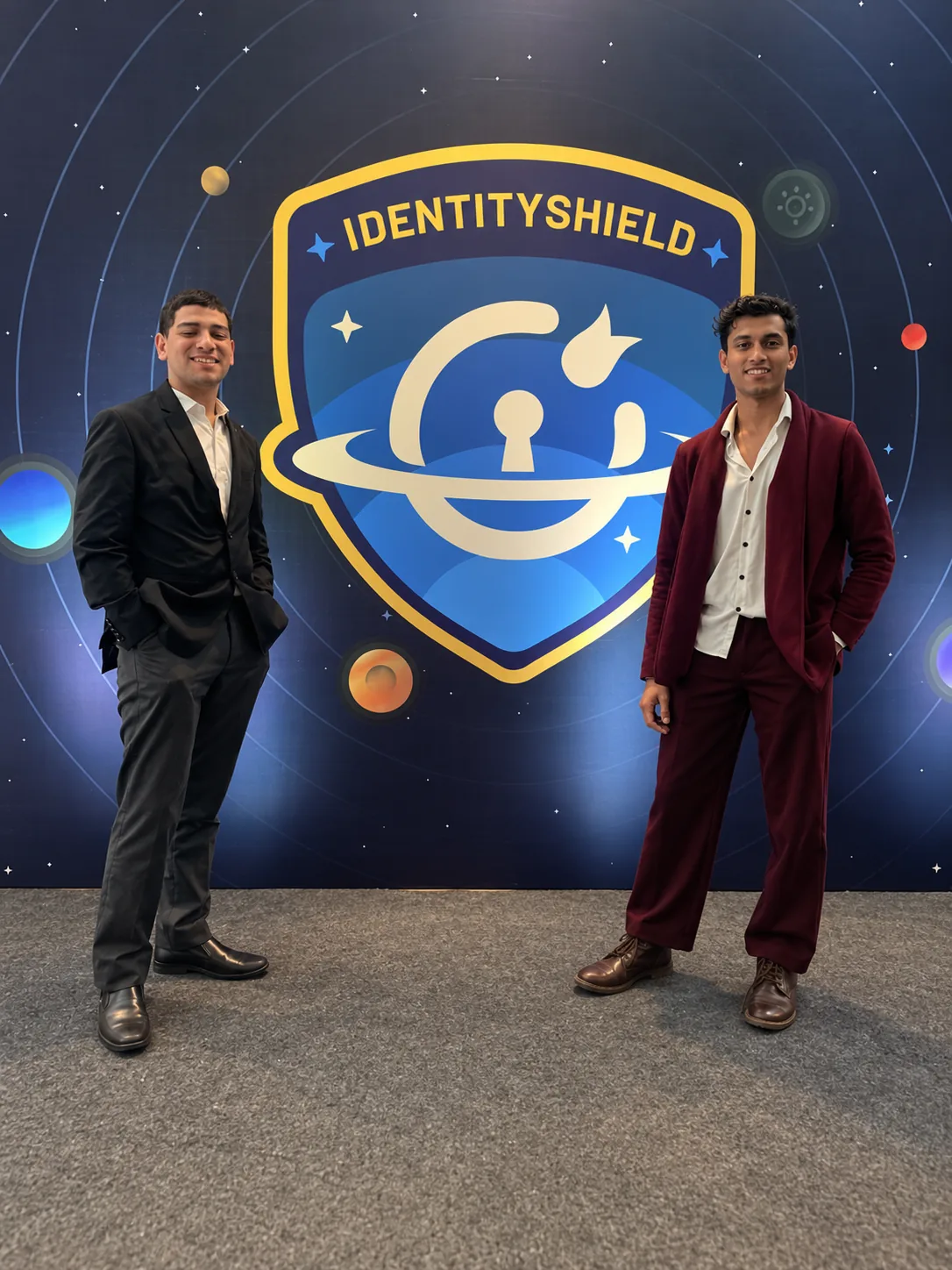
In 2024 the summit became Identity Shield, and I designed its logo.
The mark takes the keyhole ring from the miniOrange logo, sets it inside a shield and wraps an orbit around it. The name runs along the top of the shield.
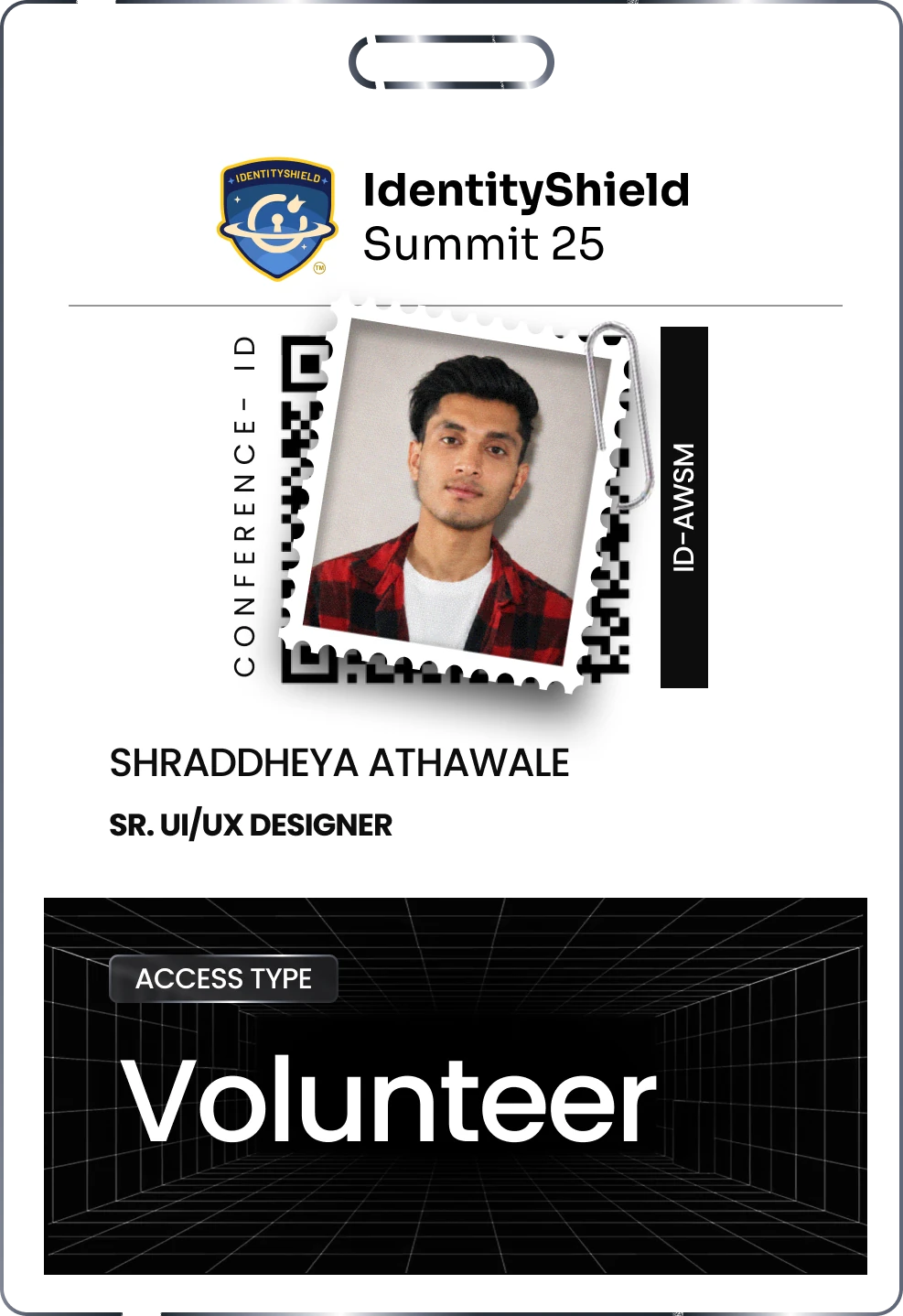
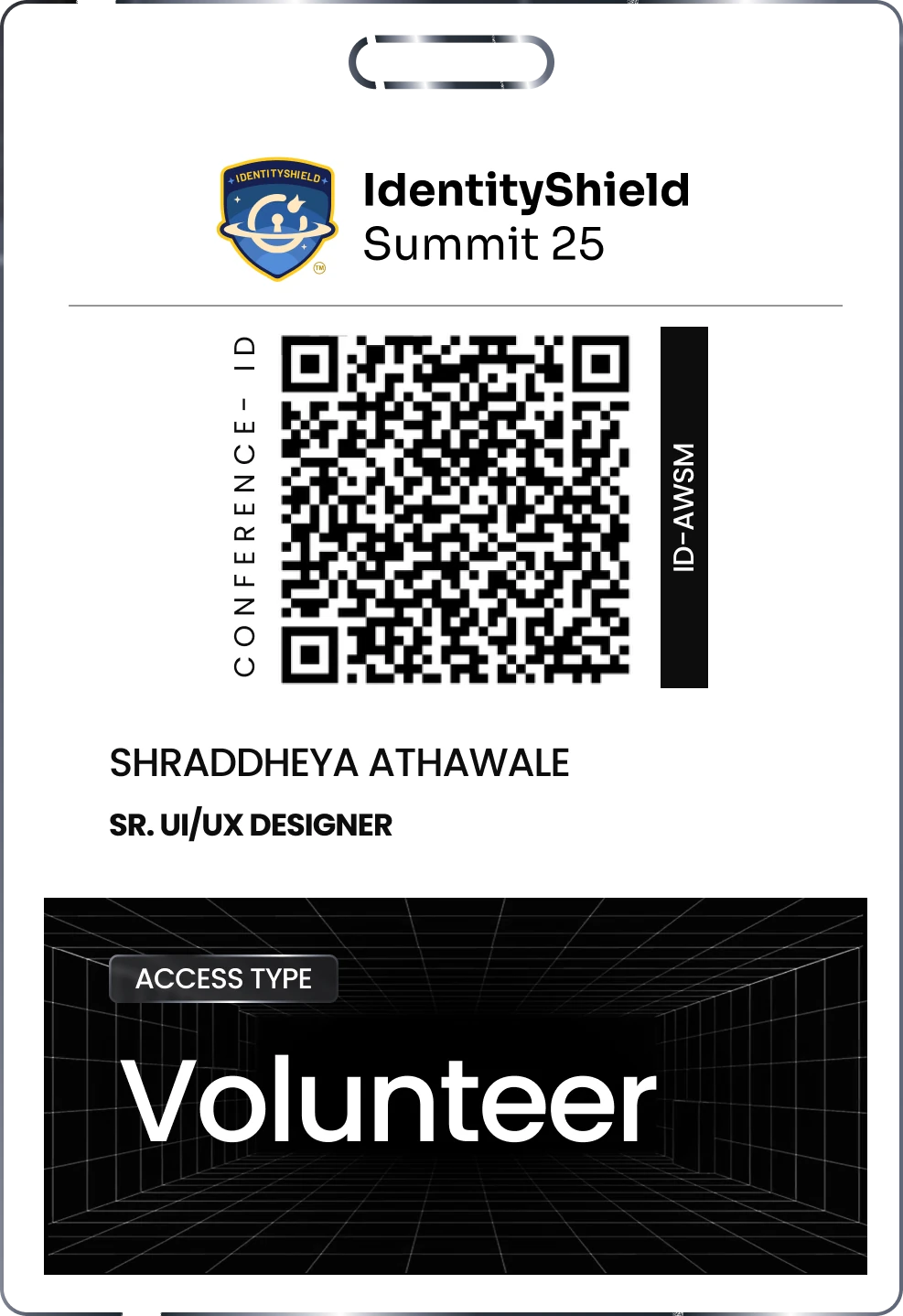
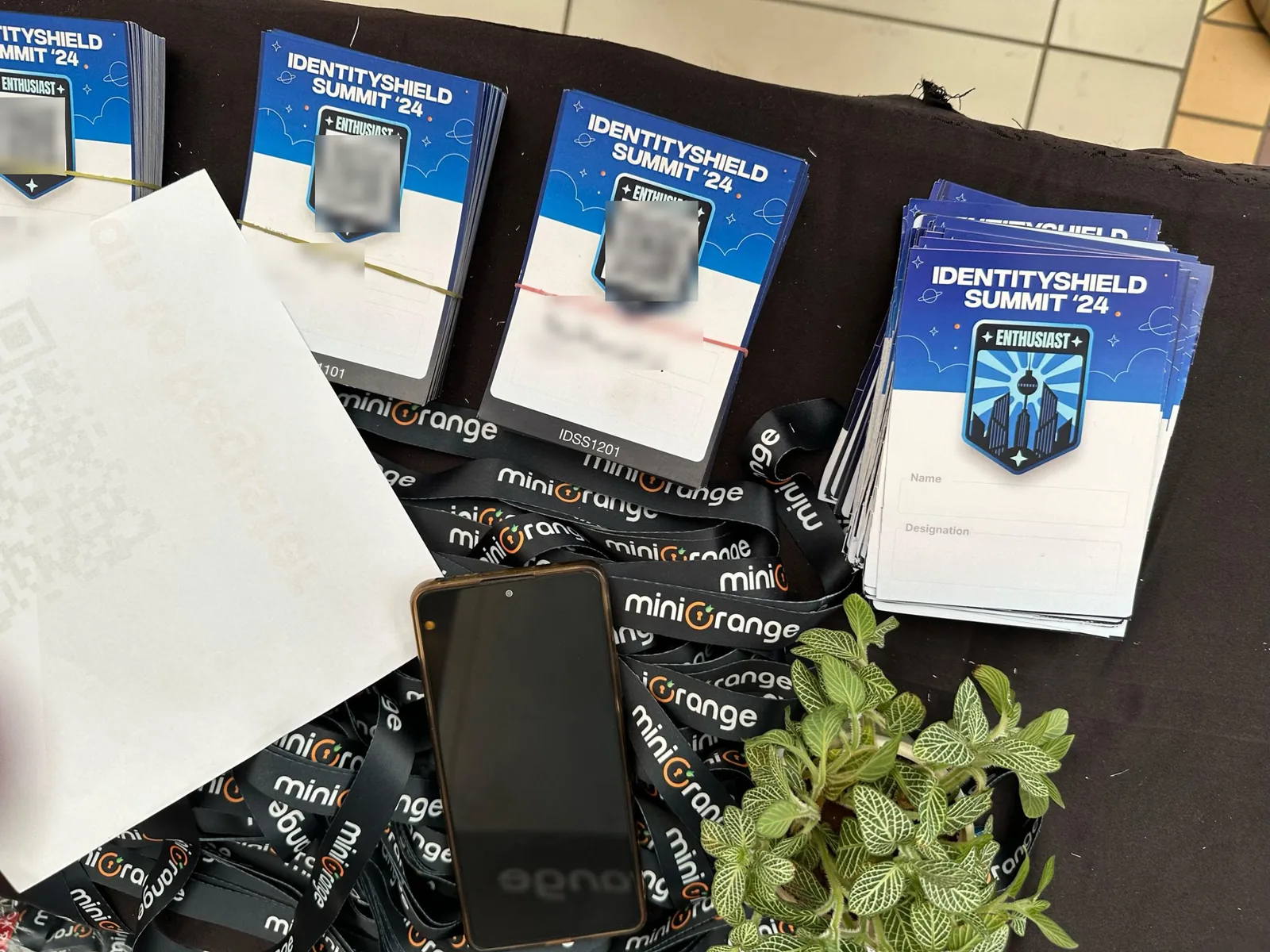
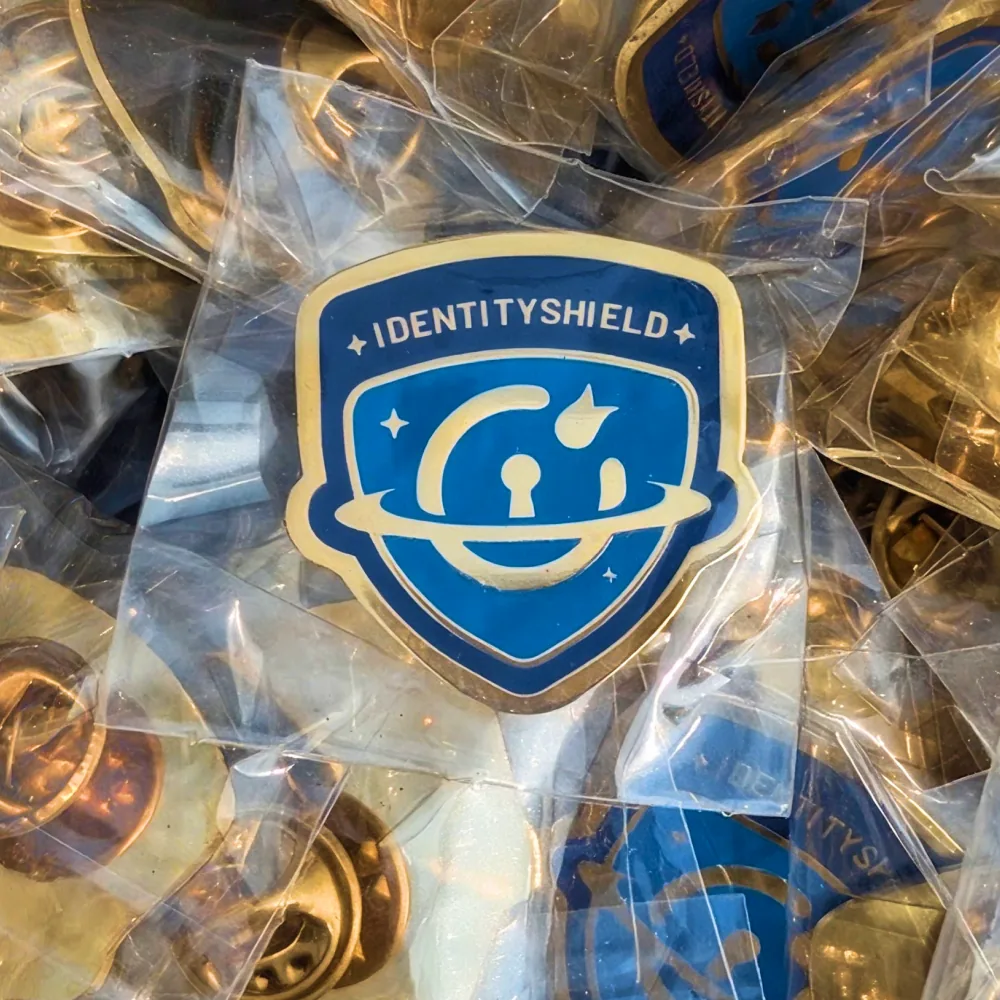
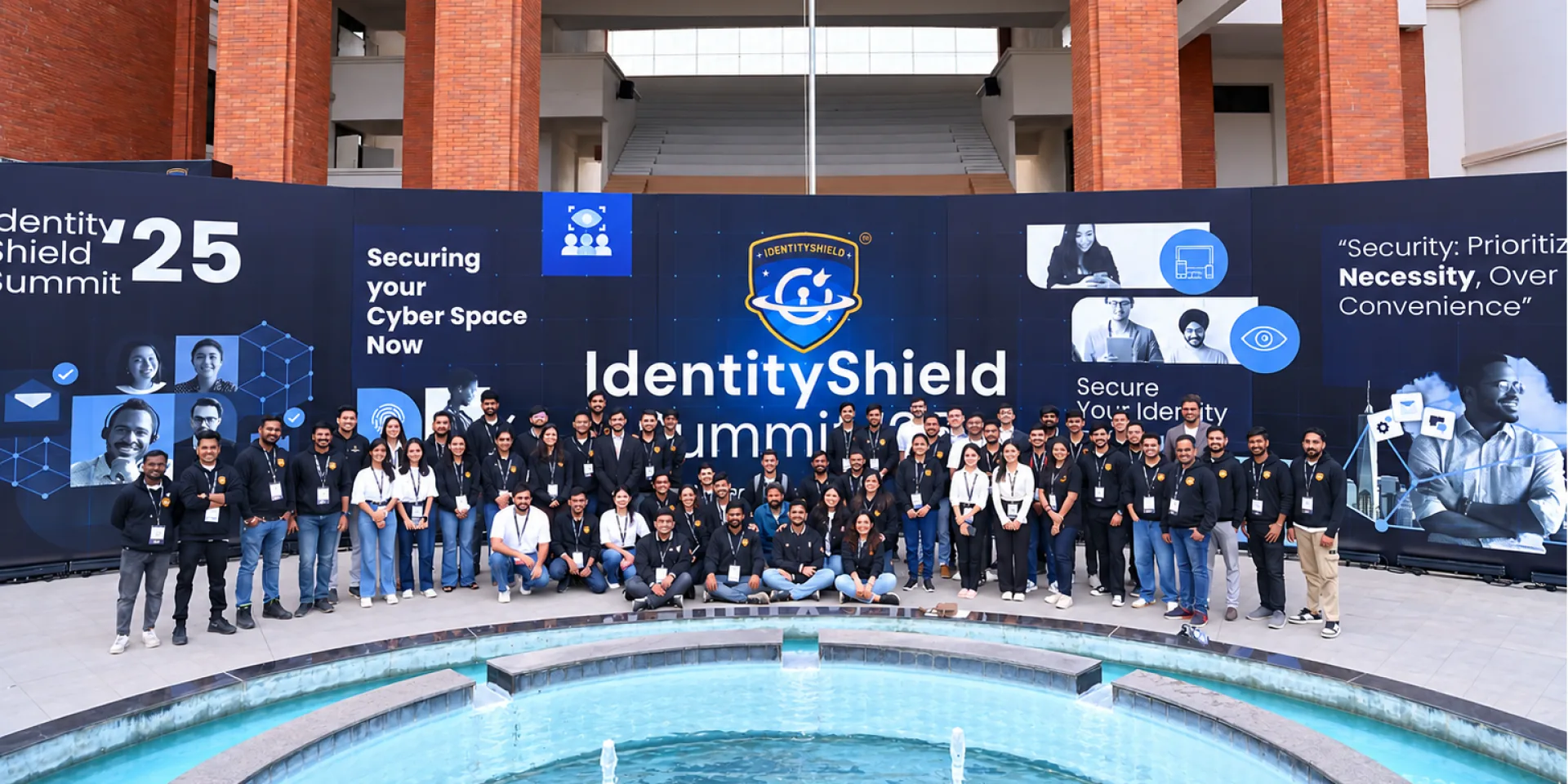
It has been the event’s logo since, from the 2024 photo wall to badges, lanyards, stickers and pins.

Seventy feet, one photo at a time.
For IdentityShield Summit ’24 I designed a photo wall about 10 ft high and 70 ft wide.
Nobody photographs a 70 ft wall. People photograph the ten feet behind them, in portrait, on a phone. So I built it as a row of panels that each work alone: one message and one graphic, placed at head height. From across the hall, the panels still read as one wall.

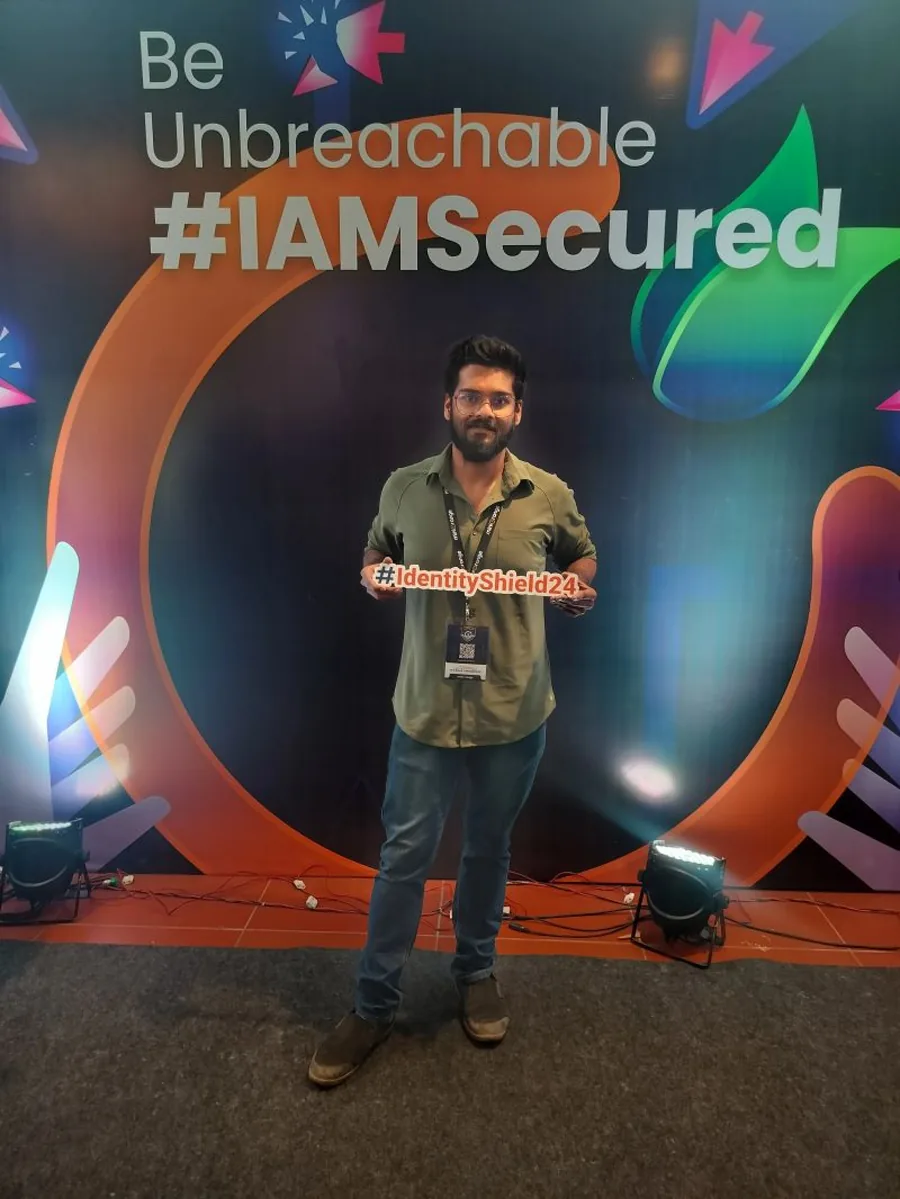

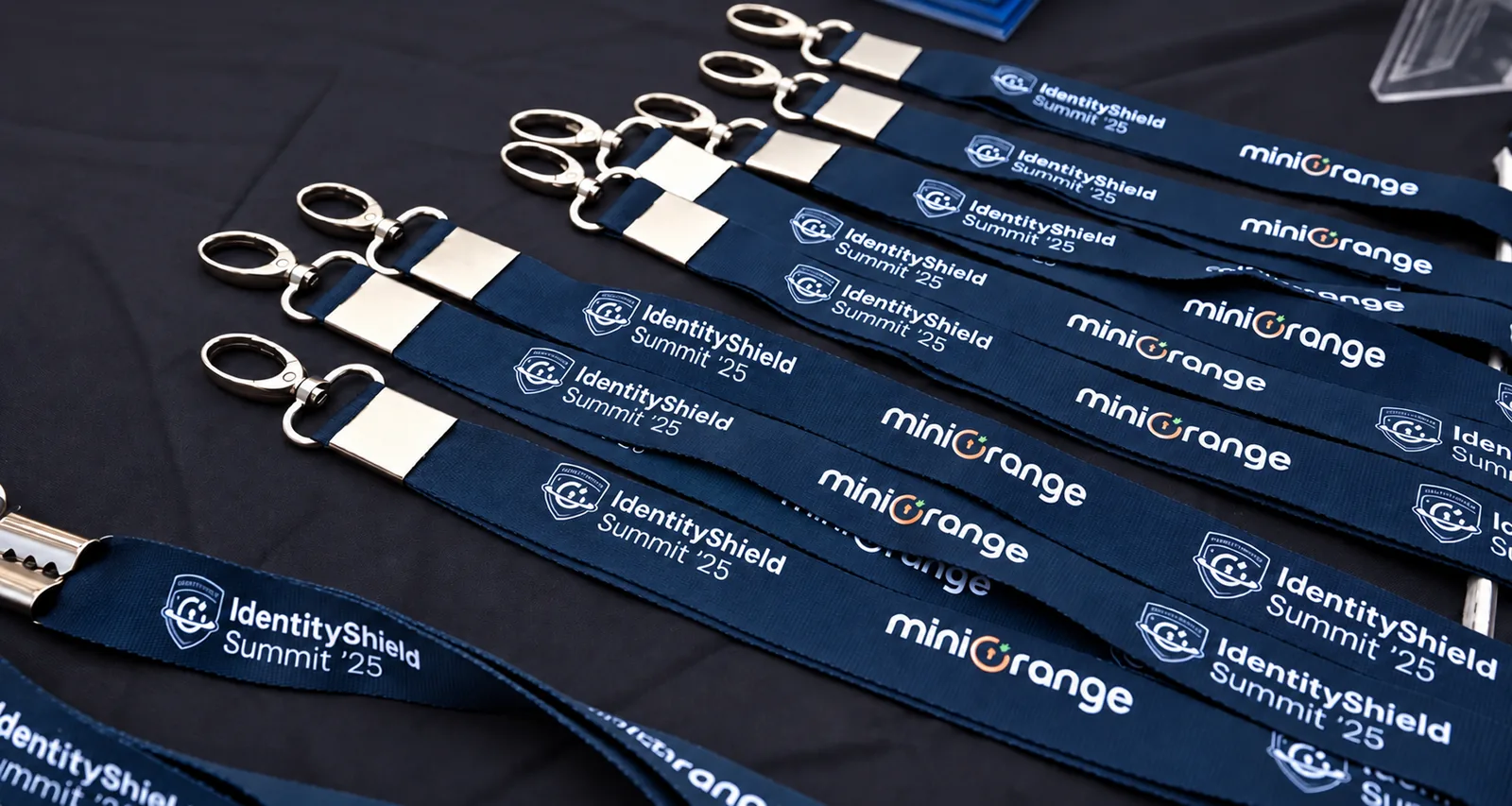
Registration that year: badges and lanyards stacked and waiting on the desk.
Out in the city.
IdentityShield Summit ’25 ran on 11 and 12 January 2025 at Dhruv Global School in Sus, Pune. The campaign billed it as Pune’s biggest cybersecurity conference, so it had to reach people before they reached the venue: on hoardings along the commute to the IT parks, in social feeds and on flyers.
One idea, carried everywhere.
A padlock whose body is a QR code. Scanning it was the call to action, and the lock said what the event was about. It ran from the early-bird post to the hoardings, the flyer and the registration standee at the gate.
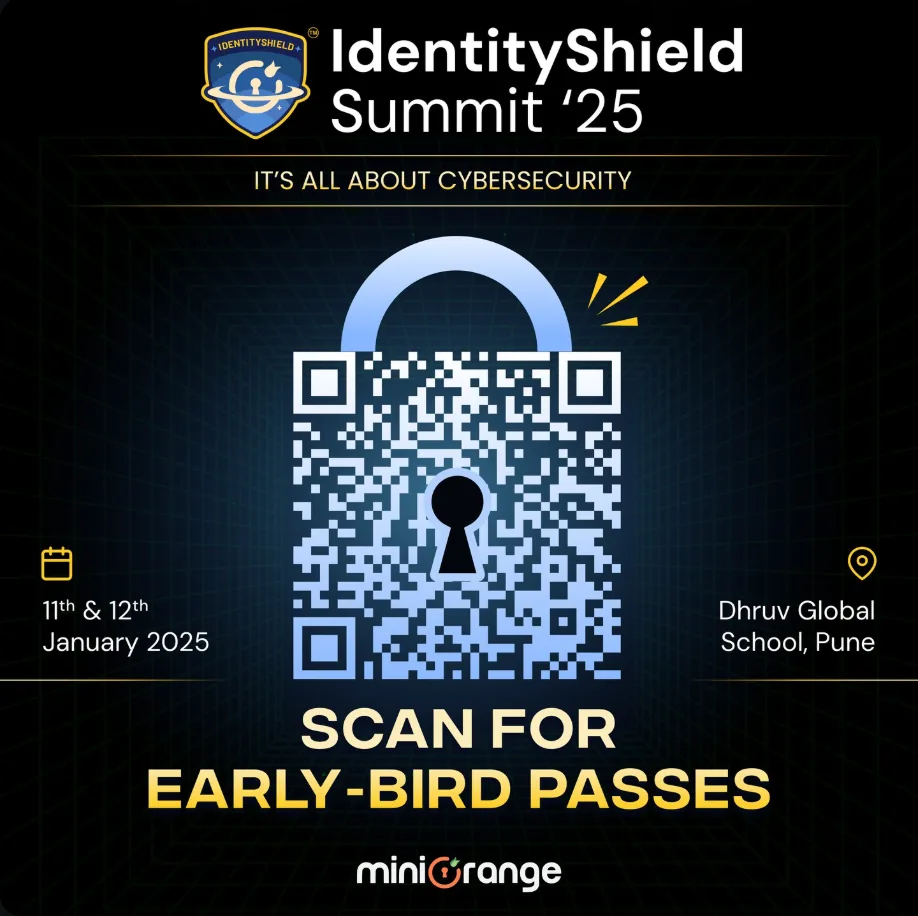
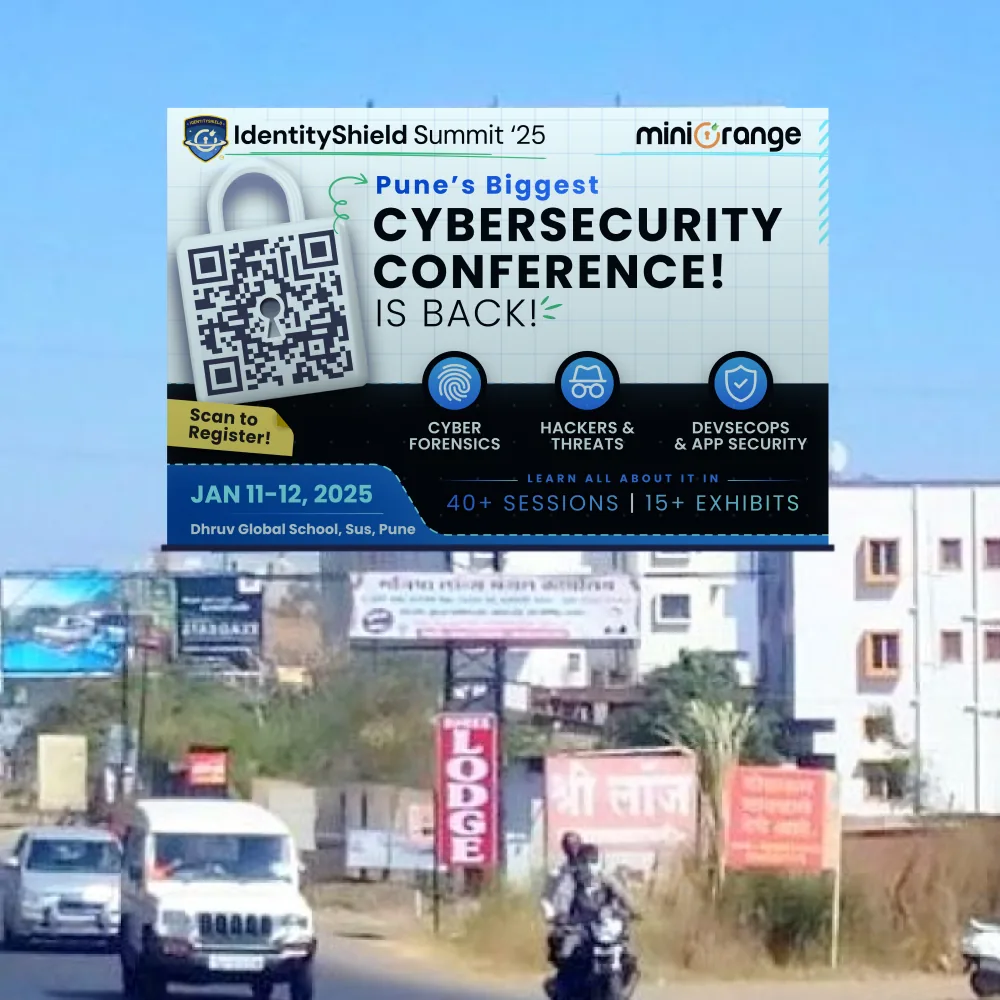
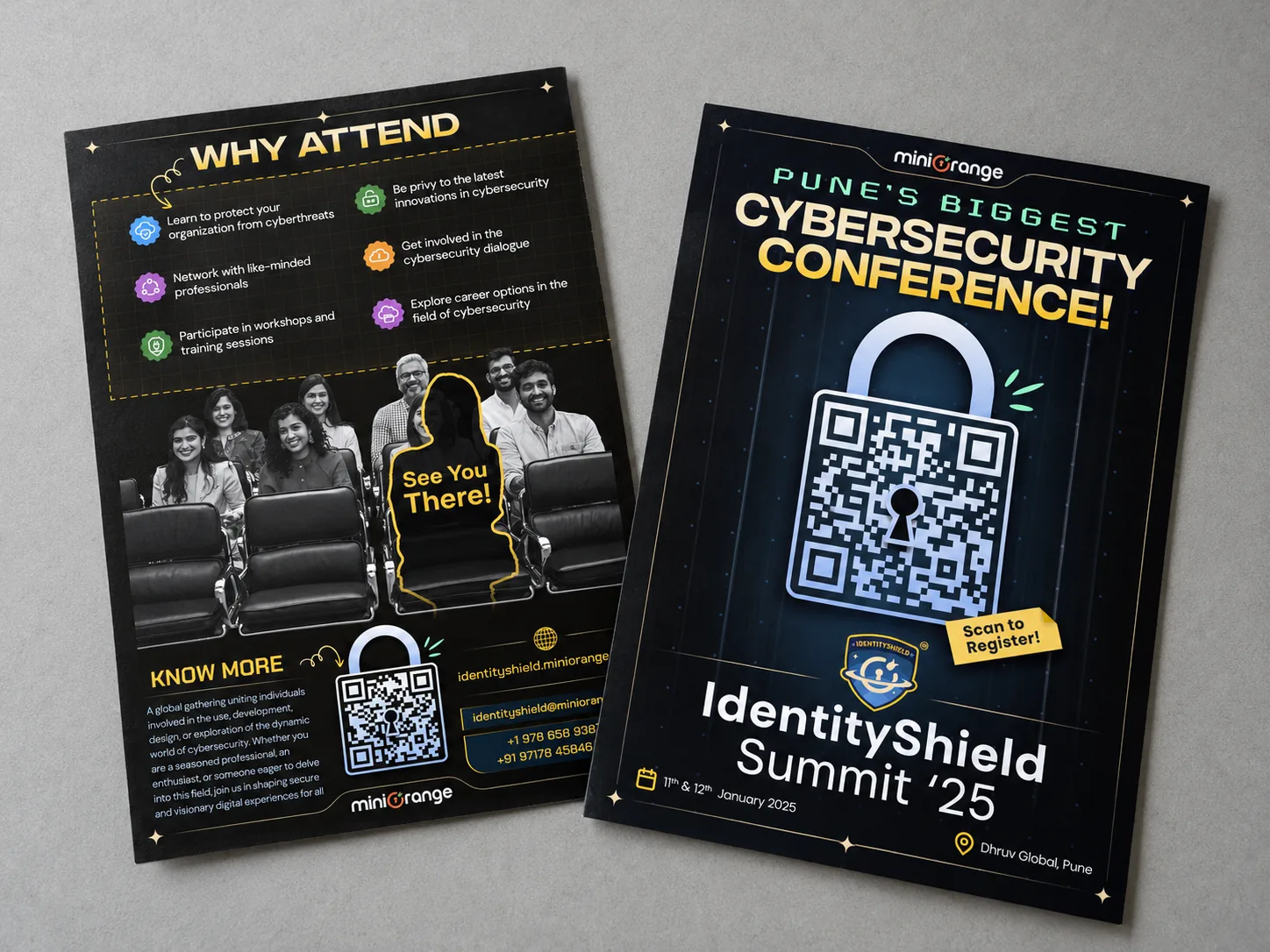
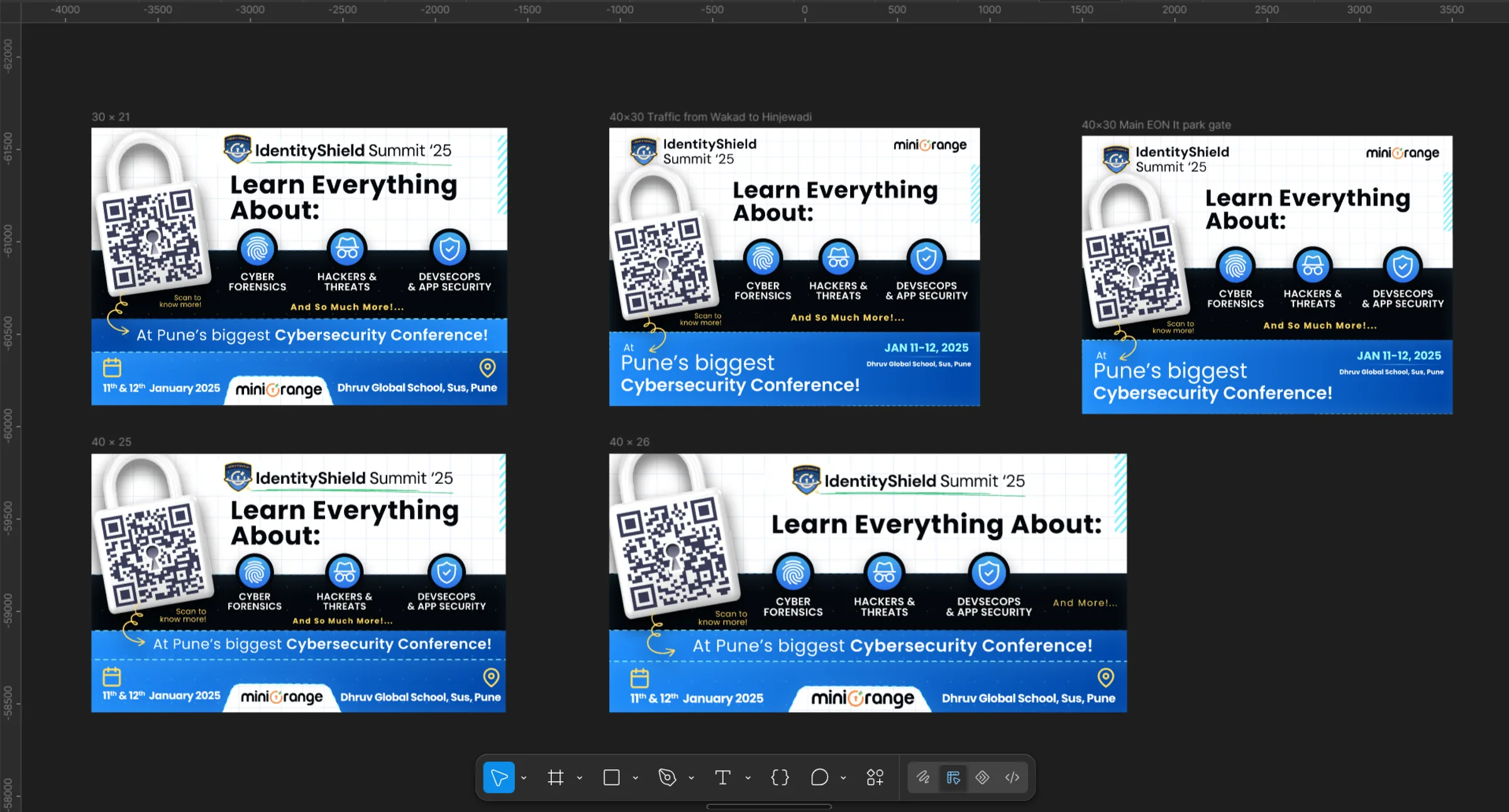
Five sizes, one layout.
The hoardings came in five sizes, from 30×21 to 40×30. Each one was re-balanced rather than stretched. On the 40×30 boards, for example, the date moves to the top right and “Pune’s biggest” gets a line of its own.

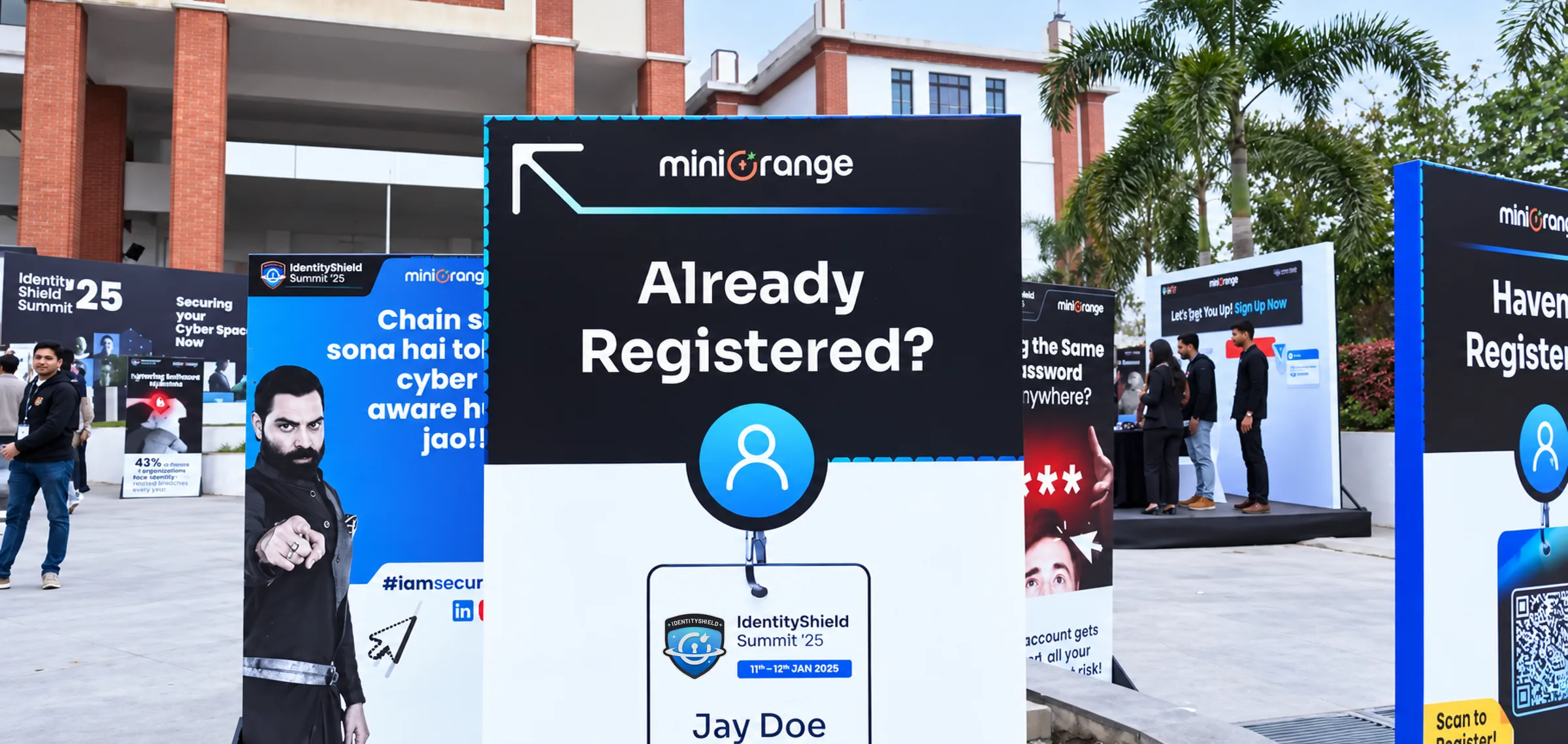
One question at the gate.
Everyone arriving had the same first question: am I already registered? So the signage asked it for them.
“Already registered?” pointed to check-in, with a big arrow and a sample badge.
“Haven’t registered?” put the padlock QR right in front of them.
Two paths, decided in the first few seconds. It’s the same split I’d design on a sign-up screen, built at human height.
Planning the floor before designing for it.
IDS ’25 had an exhibition floor and no floor plan to start from. What I had were photos of the empty hall.
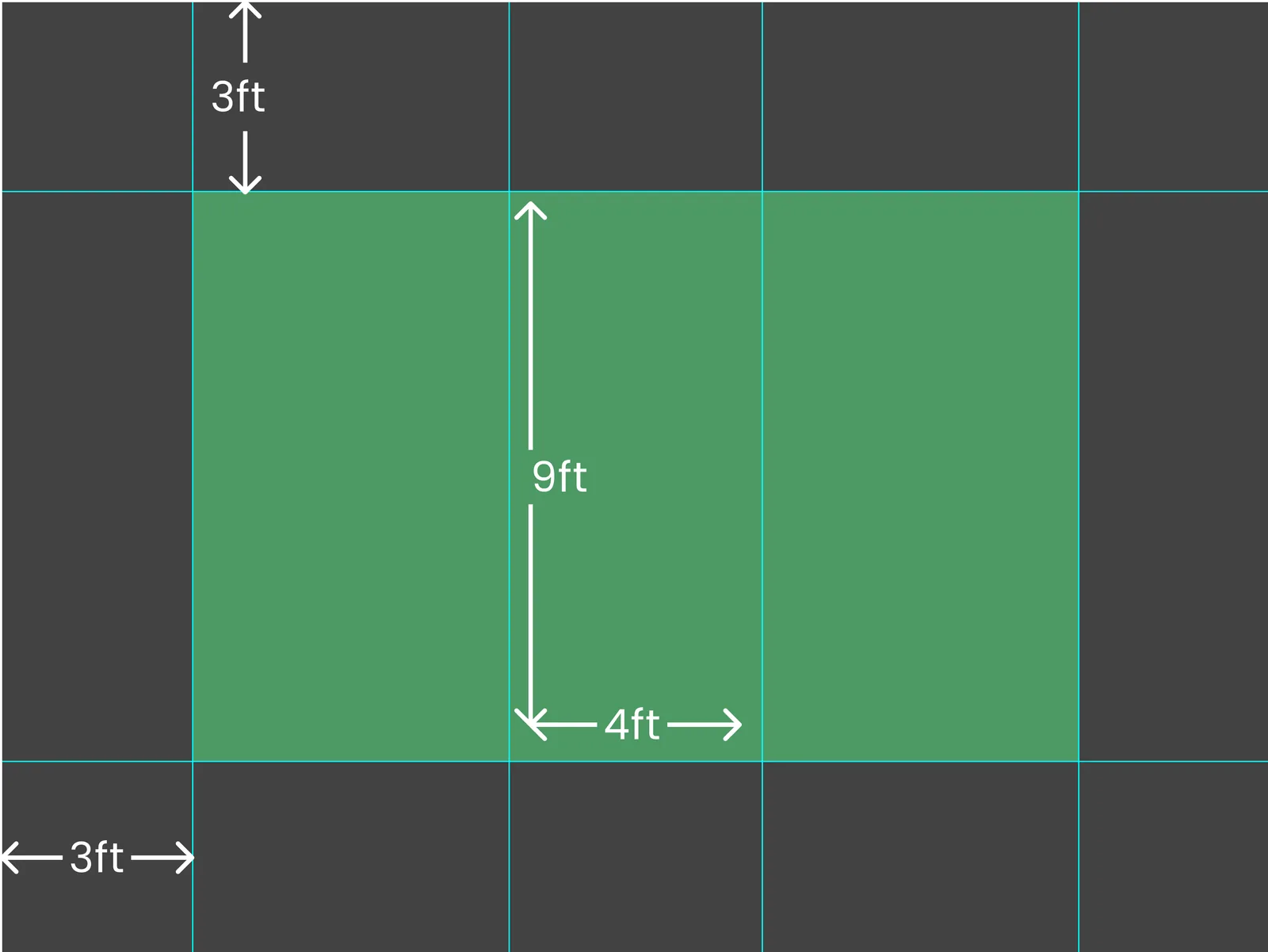
So I measured heights in those photos pixel by pixel, rebuilt the hall in 3D, and used it to work out how many 10×10 ft booths would fit, and where a bigger booth could go.
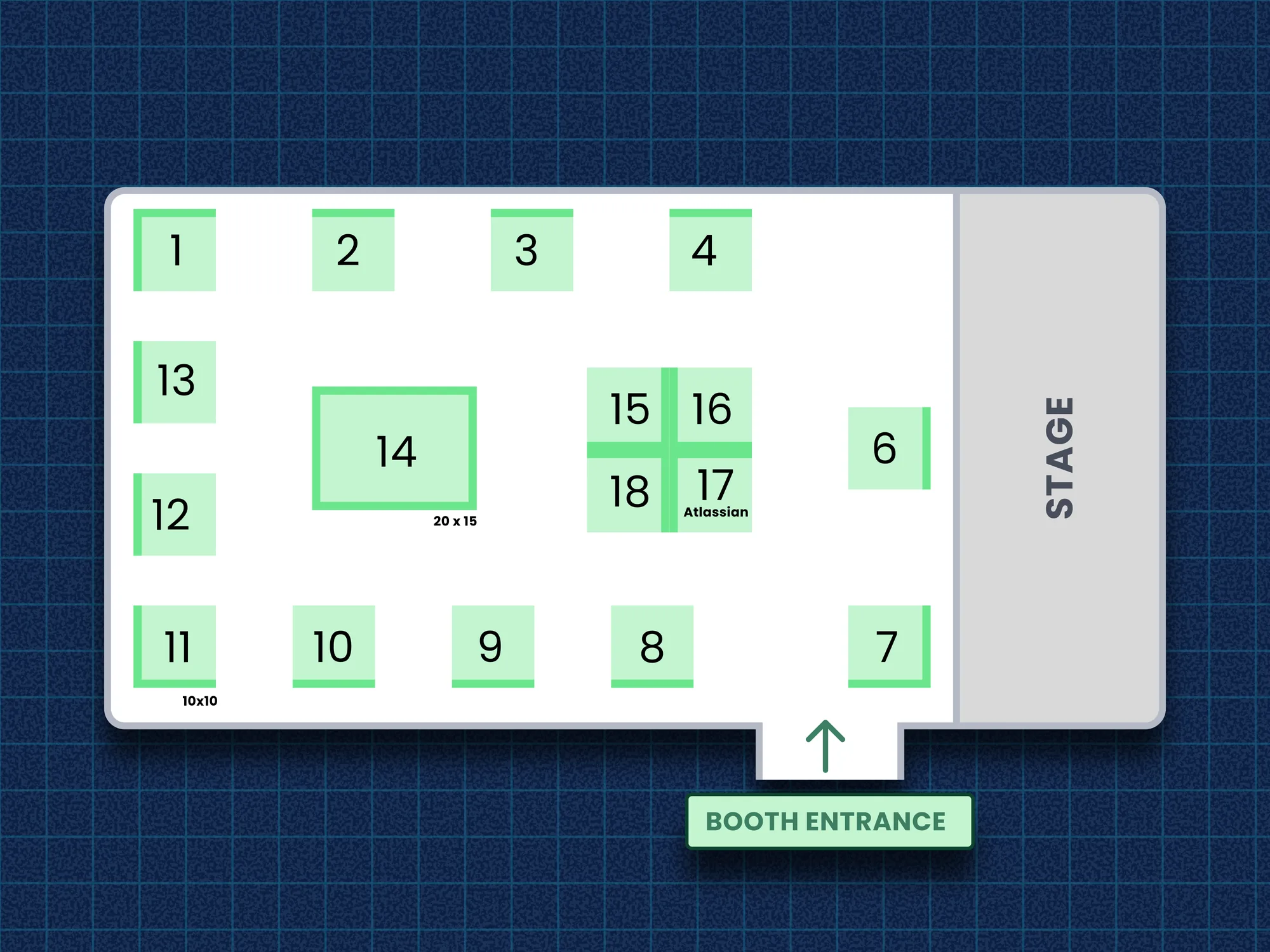
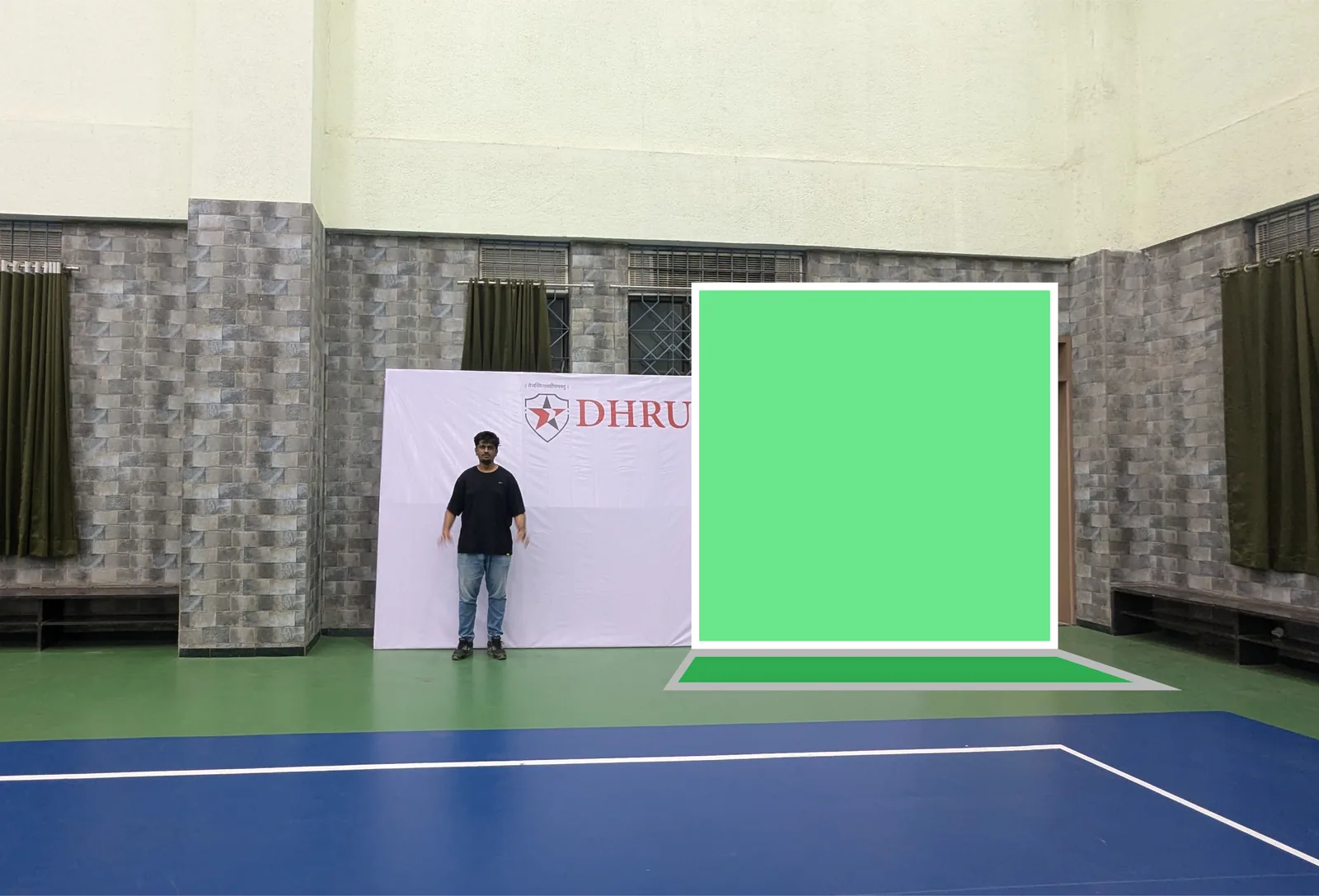
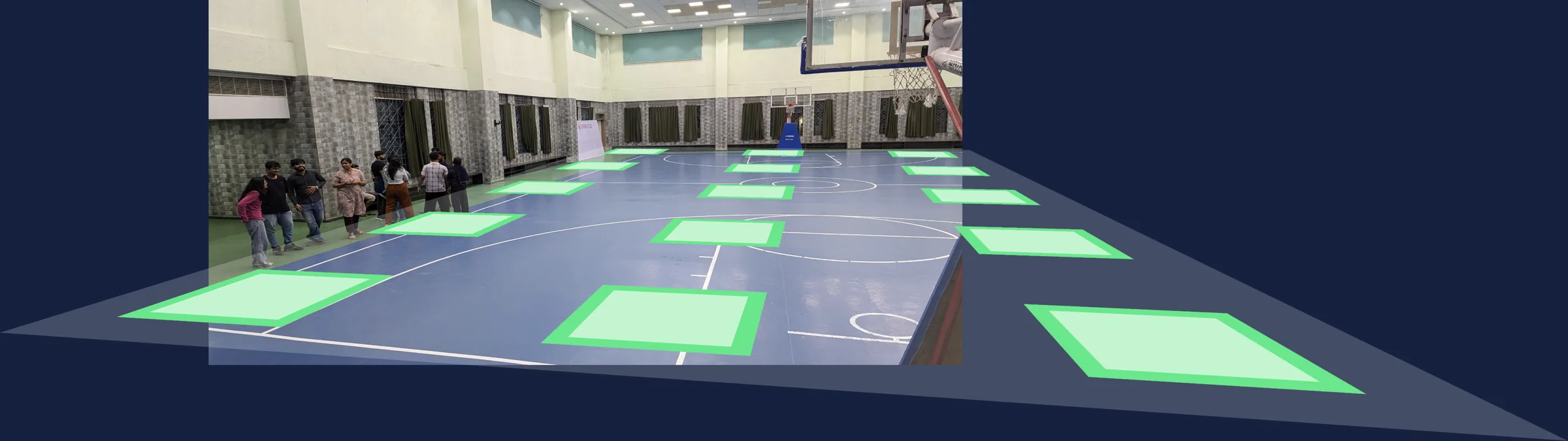
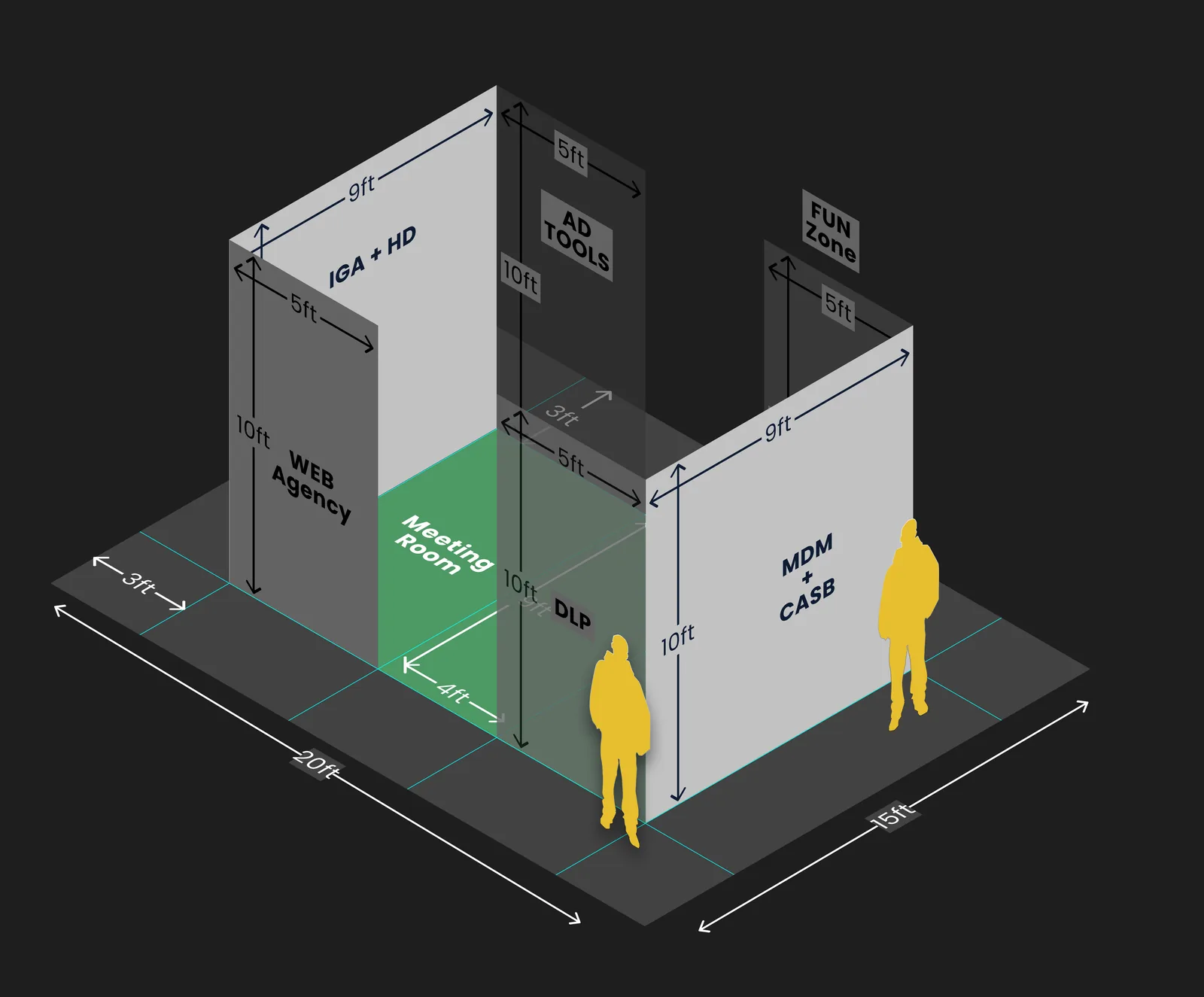
The hub in the middle.
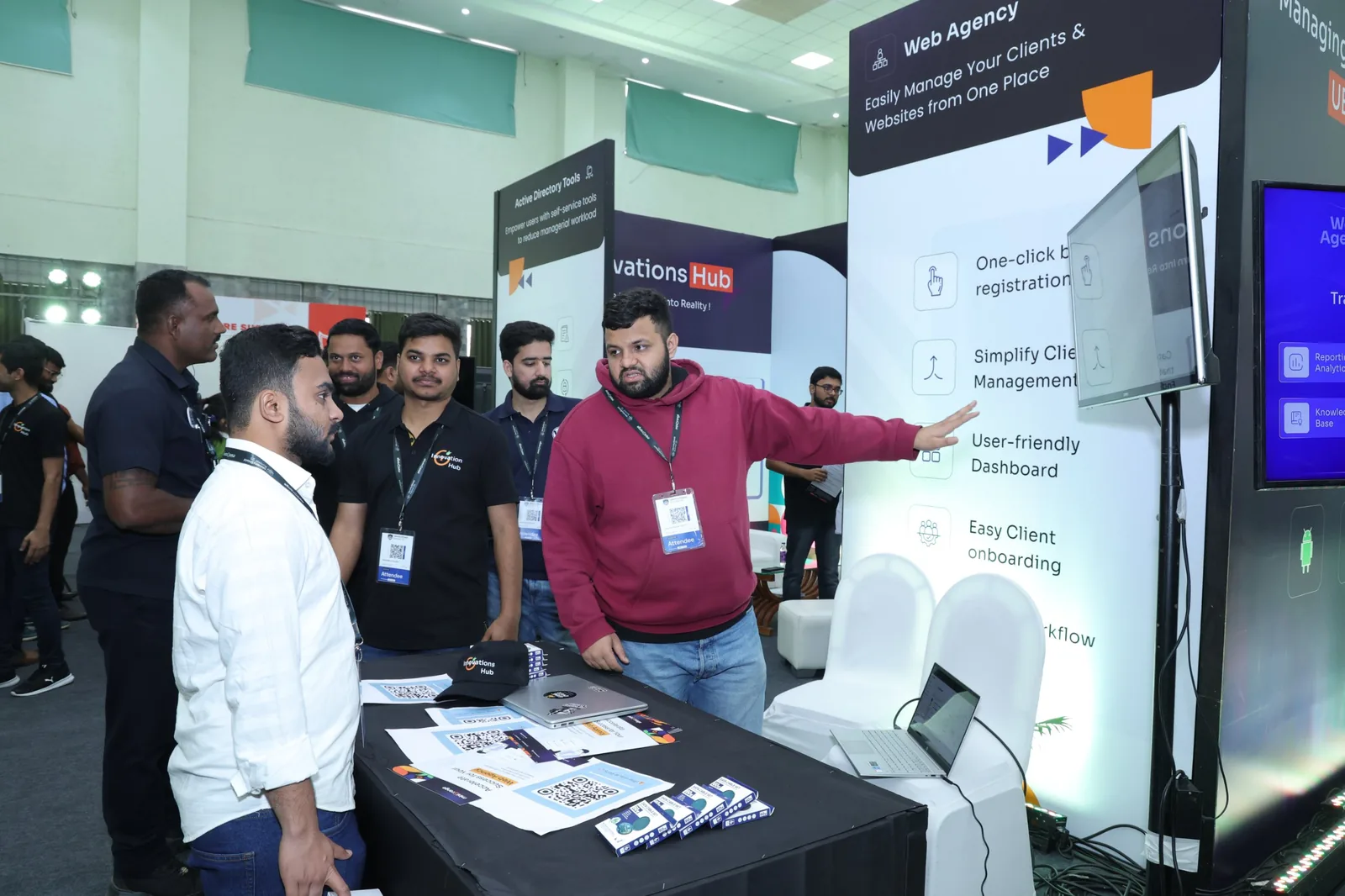
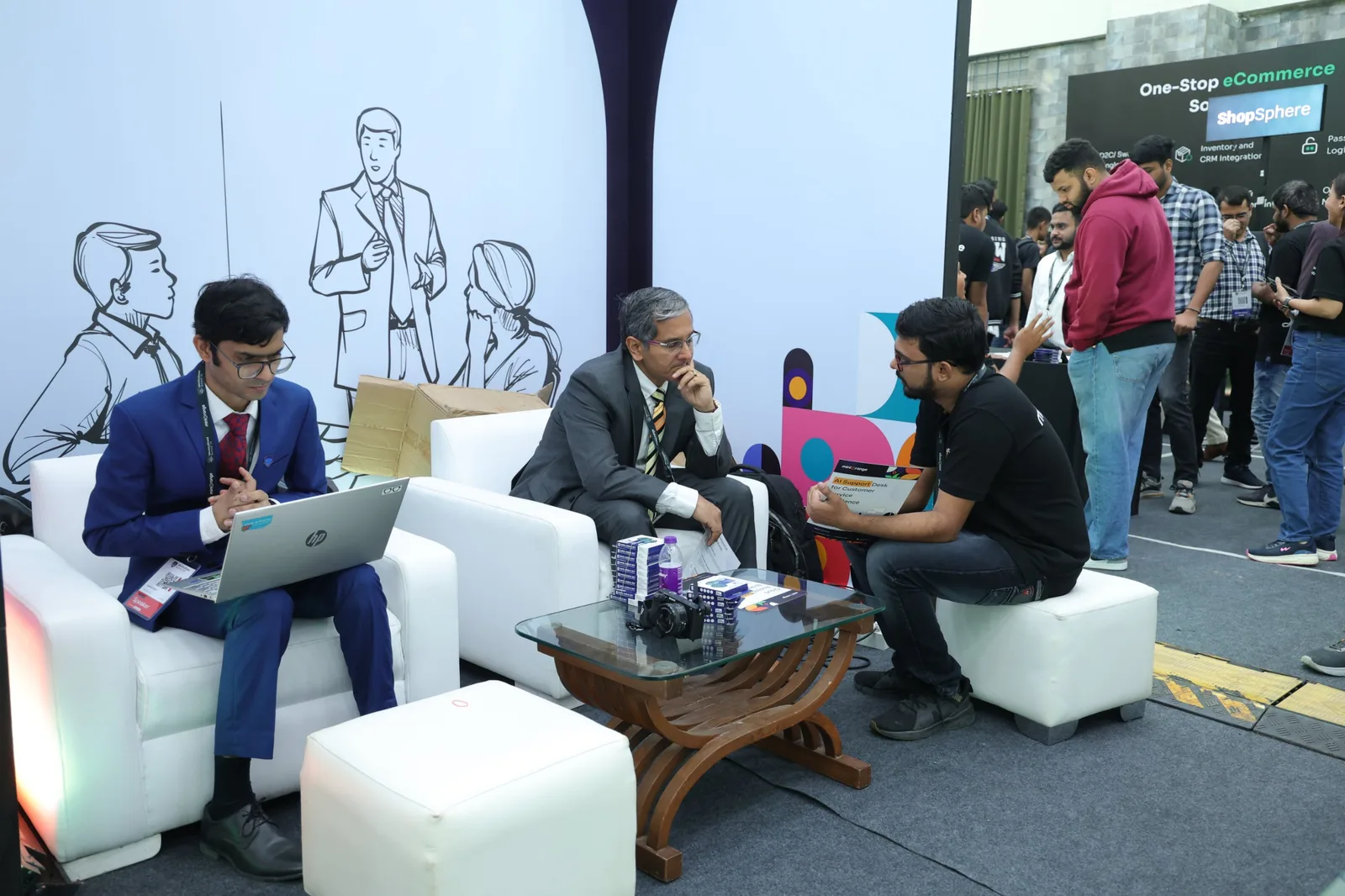
The biggest space went to a 20×15 ft Innovation Hub in the centre. Product booths ran around its outer walls (Web Agency, IGA + HD, AD Tools, DLP, MDM + CASB and a Fun Zone), with a meeting room inside.
Room for one more.
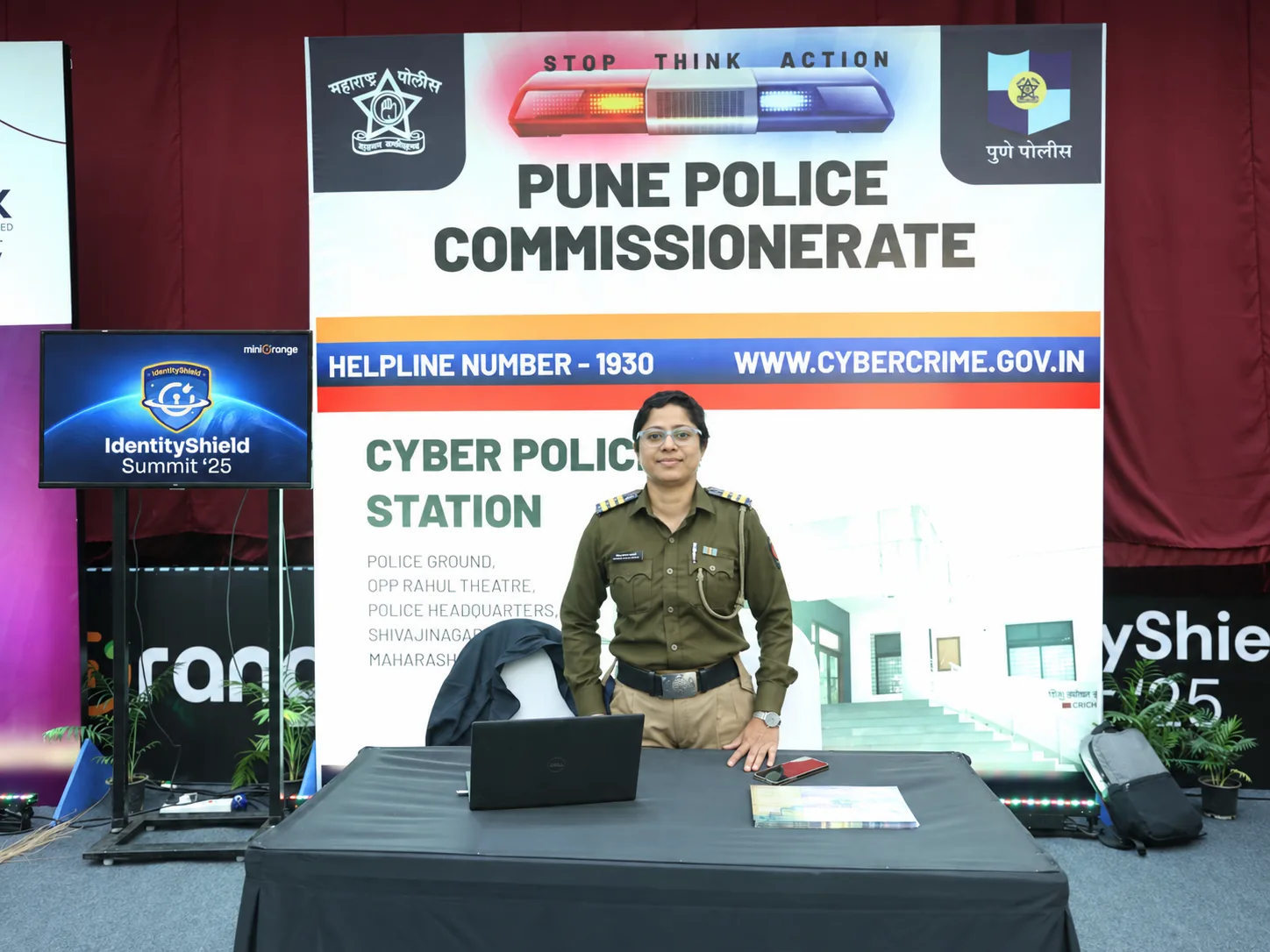
The plan had space for 18 booths. On the day there were 19: the Pune Cyber Police set up a booth of their own, and I designed that one too.
The page people registered on.
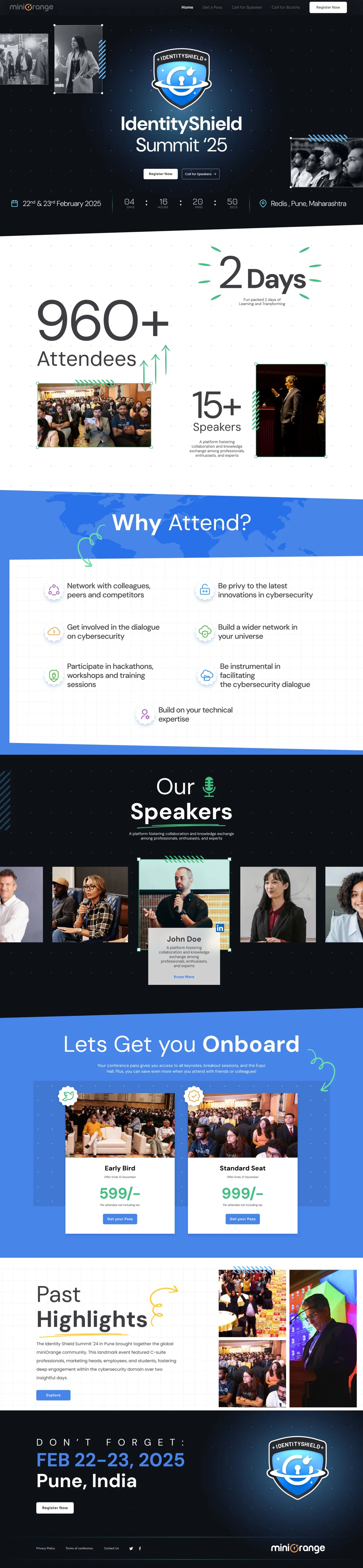
I designed the event’s landing page: registration and the call for speakers up front, then why attend, the speakers, the passes and a look back at 2024.
What people took home.
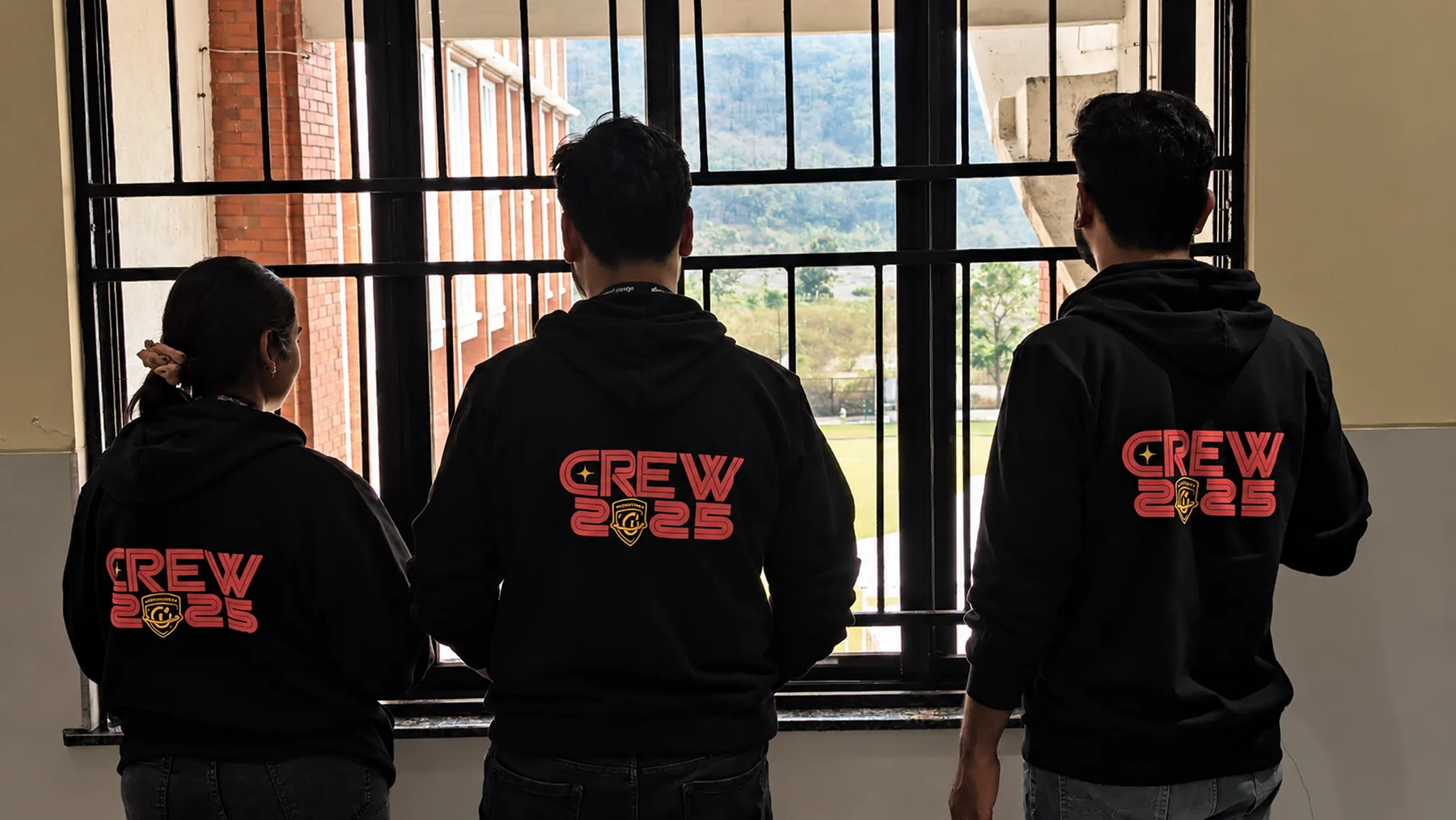
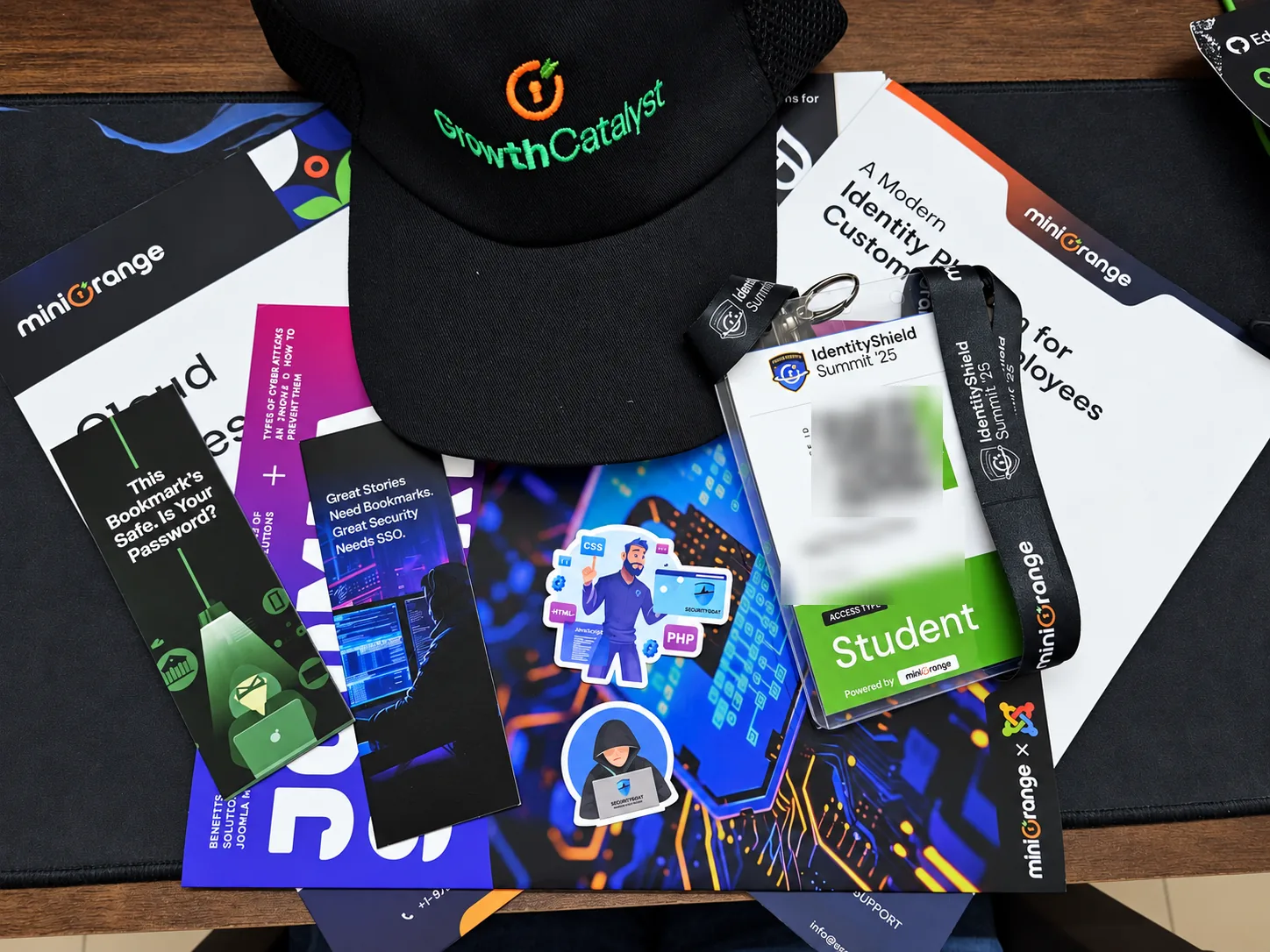
The identity also had to hold up on things people wore and carried. Here it has very little room, so it comes down to the shield and a name.
Three editions.
2023
2024
2025
Same questions, bigger surfaces.
Most of my work at miniOrange lived on screens. Identity Shield moved it onto walls, roads and gates. The questions stayed the ones I ask of any interface: what needs to be understood first, from how far away, and by whom.
It’s also the project I got to grow up with. I designed for it while it was still working out what it was, and it’s the part I care about most.
This one lived outside Figma.
walls, roads, gates, boothsImages marked as mockups are presentation mockups. Event photos are from the summits. Attendee details are blurred.